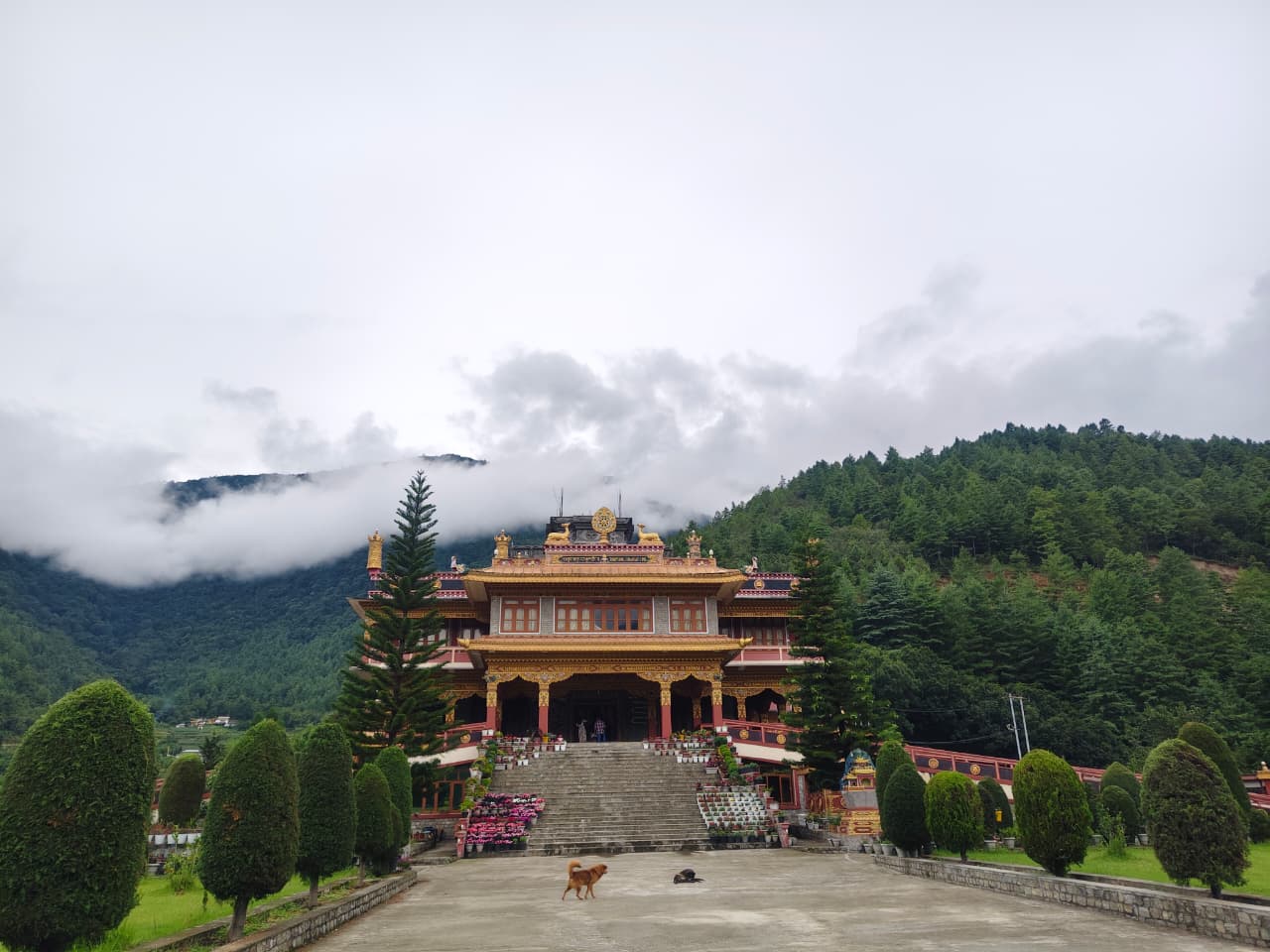
Who the Monpa are: language, Buddhist practice, handmade paper and carpet crafts, village architecture, etiquette and how to visit respectfully.
Who the Monpa are
The Monpa are the dominant community of Tawang and northern West Kameng, with historic, linguistic and religious ties to Bhutan and Tibet. Several distinct sub-groups exist — Tawang Monpa, Dirang Monpa, Lish, But and Kalaktang Monpa — speaking related but not always mutually intelligible dialects. Tshangla, shared with eastern Bhutan, is widely spoken around Dirang.
The Sherdukpen of Shergaon and Rupa and the Brokpa yak herders of the high pastures are neighbouring communities with their own languages and customs, often lumped in with the Monpa by outsiders. They are not the same people.
Buddhism in daily life
Monpa Buddhism follows the Gelugpa school, and Tawang Monastery has been its institutional centre since the 1680s. The sixth Dalai Lama, Tsangyang Gyatso, was born at Urgelling near Tawang in 1683 — a fact that anchors the region's religious identity. Prayer wheels, chortens, mani walls and roadside flags are not decoration; they are a working devotional landscape maintained by the villages that surround them.
Village gompas run their own calendars. If you happen on a puja in a small village, you are welcome to watch quietly from the edge; you are not welcome to walk through it with a camera.
Architecture and the village
Traditional Monpa houses are stone-walled with timber upper storeys, small windows against the cold, and livestock or storage below the living floor. Roofs were once shingle and are now largely corrugated tin, often with a small chorten finial. Maize and chillies dry on the walls through autumn. Thembang, a fortified dzong village on India's UNESCO tentative list, is the best-preserved example on the circuit.
Crafts: paper, carpets and masks
Mon shugu, handmade paper from the bark of the local shugu sheng shrub, has been produced here for centuries and is still used for scriptures. Tawang's craft centre keeps the tradition alive alongside carpet weaving in strong Tibetan patterns and the carving of the wooden masks used in Torgya and Losar dances. Buy from the craft centre or the villages rather than from resellers — the price difference goes to the maker.
Etiquette that matters
Walk clockwise around chortens, mani walls and prayer wheels. Remove shoes and hats in prayer halls. Do not point your feet at an altar or a monk. Ask before photographing people, and accept refusal gracefully. Do not touch religious objects or climb on mani walls for a photograph. Accept butter tea when it is offered, even if you only sip it.
The most common unintentional offence we see is travellers walking anticlockwise around the monastery's inner circuit while filming. It is a small thing that reads as significant disrespect.
Plan the trip
Culture-led Tawang trips
Monpa villages, weaving centres and monasteries fit best on itineraries with unhurried days.
The calculator is a planning tool, not a booking form — it gives an indicative budget by group size, nights and hotel category before you ask us for a quote.
Monpa Culture: A Traveller's Guide: photographs
Photographs of this route, with the source credited beneath each frame.
The gilded Shakyamuni in the Dukhang — the heart of Tawang Monastery's main assembly hall.Tawang Monastery (Galden Namgey Lhatse) · Photo: Living Roots Tours & Adventure Novices leaving the Dukhang after morning prayers — the courtyard is busiest between 6 and 8 a.m.Tawang Monastery courtyard · Photo: Living Roots Tours & Adventure A Monpa house near Dirang: stone walls, a rooftop chorten finial and maize drying for winter.Monpa village, West Kameng · Photo: Living Roots Tours & Adventure Thembang's stone-and-timber houses inside the old dzong walls, on the UNESCO tentative list.Thembang Dzong, West Kameng · Photo: Living Roots Tours & Adventure
Monpa Culture: A Traveller's Guide: frequently asked questions
- What language do the Monpa speak?
- Several related dialects, with Tshangla widely spoken around Dirang and distinct Tawang Monpa dialects further north. Hindi is understood almost everywhere and English in towns and hotels.
- Can travellers stay with Monpa families?
- Yes. Homestays operate in Sangti, Thembang, Shergaon, Mukto and several villages around Tawang. They are simple, warm and usually the most memorable nights of the trip.
- What should I not do in a monastery?
- Do not walk anticlockwise around religious structures, do not wear shoes or hats inside prayer halls, do not use flash near thangkas, and do not photograph monks without asking.
Keep planning
Where to go next on this site
Tawang packages
- Tawang tour packageMain planning page — routes, permits, inclusions
- 5 nights / 6 days Tawang packageThe compact Guwahati–Tawang run
- 6 nights / 7 days Tawang packageBest balance of pace and weather margin
- Luxury Tawang toursPremium stays and private vehicles
- Tawang group toursSmall-group journeys arranged when a suitable group is confirmed
- Tawang fixed departuresContact us for the next confirmed small-group departure
Travel guides
- Bumla Pass guide
- Best time to visit Tawang in winter
- Tawang snowfall month by month
- Guwahati to Tawang road trip
- Tawang permits, ILP and travel basics
- Sangti Valley guide
- Mago Valley guide
- Thembang village guide
- Best time to visit Tawang
- Tawang weather by month
- Tawang packing list
- Tawang trip budget guide
- Inner Line Permit: how to apply
- Bumla Pass permit process
- Tawang with family and kids
- Tawang honeymoon guide
- Tawang photography guide
- Tawang food guide
- Tawang festivals and Torgya
- Dirang travel guide
- Bomdila travel guide
- Tawang FAQs
- Shergaon travel guide
- Zemithang travel guide
- Mukto village guide
- Mandala Top guide
- Luxury Tawang travel guide
Planning the whole trip rather than one stop? Start with our Tawang tour package page — it covers routes, permits, seasons, stays and how a Tawang trip is quoted.
Plan this with us
Living Roots Tours & Adventure runs trips across Assam and Arunachal Pradesh, with experienced hill drivers and suitable vehicles arranged for the complete route. Tell us your dates and we will build the route around them.
Continue reading
- 5 Nights / 6 Days Tawang Tour5 nights 6 days Tawang tour itinerary from Guwahati: Dirang, Sela Pass, Tawang Monastery, Bumla Pass and Sangetsar Lake. Request a custom quote.
- 6 Nights / 7 Days Tawang Tour6 nights 7 days Tawang tour itinerary ex-Guwahati via Nameri/Bhalukpong, Dirang, Sela Pass, Bumla, Sangetsar and Tawang Monastery. Custom quote on request.
- 7 Nights / 8 Days Tawang TourA slower 7-night, 8-day Tawang circuit from Guwahati via Nameri/Bhalukpong, Dirang and Bomdila, with three nights in Tawang. Custom quote on request.
- Tawang Tour Packages from GuwahatiTawang tour packages: 6 to 11 day itineraries ex-Guwahati, permits, inclusions and the right season to travel. Request a custom quote.
- Luxury Tawang ToursPremium Tawang tours: comfortable stays, private Fortuner or Innova Crysta vehicles and guides arranged according to the itinerary.
- Tawang Group ToursSmall-group Tawang tours arranged for friends, couples and first-time visitors travelling together. Enquire for current group possibilities.